


In Lincoln Green - A Merrie Tale Of Robin Hood
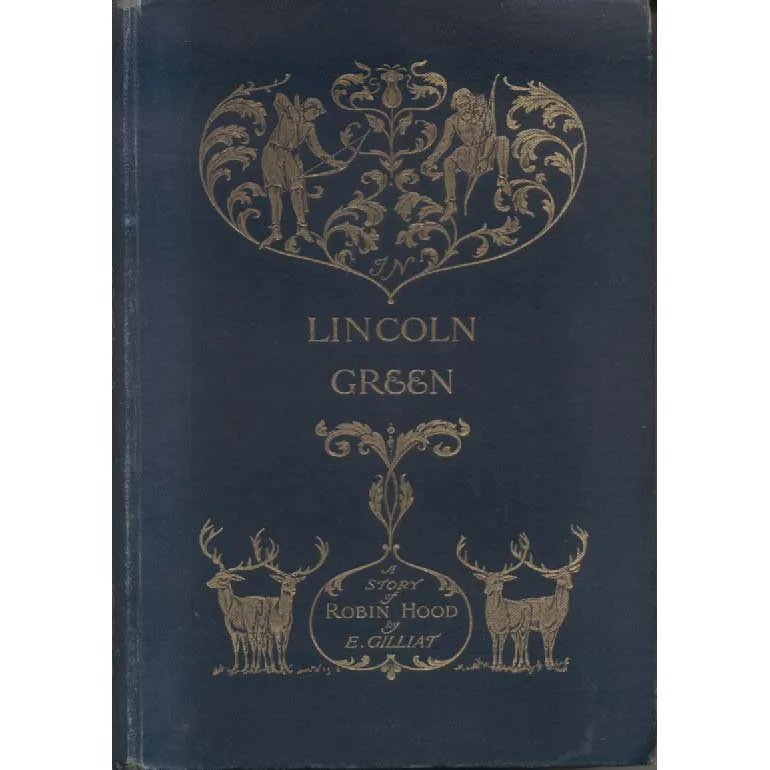
Publisher: Seeley and Co
Format: Hardback
ISBN: none
In Lincoln Green: A Merrie Tale of Robin Hood by E. Gilliat is a splendidly Victorian excursion into Sherwood Forest, where men wear tights without embarrassment, taxation is regarded as a personal insult, and the preferred method of resolving administrative disputes is to fire an arrow at somebody.
Published by Seeley and Co in 1898, this is Robin Hood as the late Victorians liked him: bold, loyal, picturesque, suspicious of authority and surrounded by enough woodland merriment to make one wonder whether anybody in medieval Nottinghamshire ever actually did any work.
Into the greenwood we go, then, among Robin and his familiar band of cheerfully lawless companions, where kings may wander about in disguise, sheriffs can generally be relied upon to make themselves unpopular, friars are rarely as meek as advertised and wealthy travellers entering Sherwood Forest do so at considerable risk to their disposable income.
The title’s promise of a “Merrie Tale” should also be understood in the traditional sense. This is not merriment involving central heating, takeaway pizza and an agreeable bottle of something on a Friday night. Victorian merriment tends to involve quarterstaffs, archery contests, disguises, ambushes, forest feasts and the possibility of suddenly discovering that the harmless-looking stranger beside you is actually Richard the Lionheart.
Robin Hood himself is, of course, one of those remarkably durable English characters who has survived for centuries largely because every generation can remake him to suit itself. Outlaw, patriot, rebel, gentleman, socialist, royalist, romantic hero, professional nuisance to the Sheriff of Nottingham — Robin has been nearly everything except, so far as we know, a chartered accountant.
Gilliat’s version belongs to the grand tradition of late nineteenth-century historical adventure: energetic, romantic, unapologetically old-fashioned and written at a time when children’s adventure books were expected to contain actual adventure rather than two hundred pages discussing the protagonist’s feelings about it.
There is something particularly agreeable about encountering Robin Hood in a book published in 1898. By then the legend was already ancient, yet Victorian Britain was busily repackaging medieval England for a new generation, polishing the armour, deepening the forest shadows and ensuring that all respectable young readers understood the importance of courage, loyalty and occasionally ignoring the law when the Sheriff was being especially tiresome.
And what better colour could there be for all this than Lincoln green, the legendary uniform of Robin’s followers? It is a phrase that instantly summons up bows, trees, deer, feathered caps and men hiding behind oaks waiting for somebody wealthy enough to justify stepping onto the road.
This copy is in Good condition, particularly considering that it has now survived well over a century of owners, shelves, houses, removals and whatever else has happened to it since Queen Victoria was still on the throne.
There are, however, a couple of signs that 1898 was not yesterday. The inner front endpaper has been torn out, presumably at some point during the book’s long history and for reasons now known only to the person who did it, who has had ample opportunity to evade questioning. There is also a slight break at the front hinge, although this is not particularly significant and is really only noticeable if you deliberately peer down into the hinge looking for trouble.
In other words, this is not one of those antique books that has somehow spent 128 years sealed in a climate-controlled chamber awaiting the arrival of a collector wearing cotton gloves. It has been used. It has survived. It has acquired a few scars. Which, given that the book is about Robin Hood, seems entirely appropriate.
A handsome piece of late-Victorian adventure fiction for collectors of Robin Hood, children’s classics, Victorian books, historical fiction or simply old books which look as though they might contain a secret map to somewhere inconvenient.
No ISBN, because in 1898 books were apparently expected to manage perfectly well without sixteen databases knowing exactly where they were.
Sold by Crappy Old Books — where occasionally even the books are old enough to remember when Sherwood Forest had fewer car parks.
Keep browsing: See more Literary Classics books Other books by E Gilliat
